Ear Disease
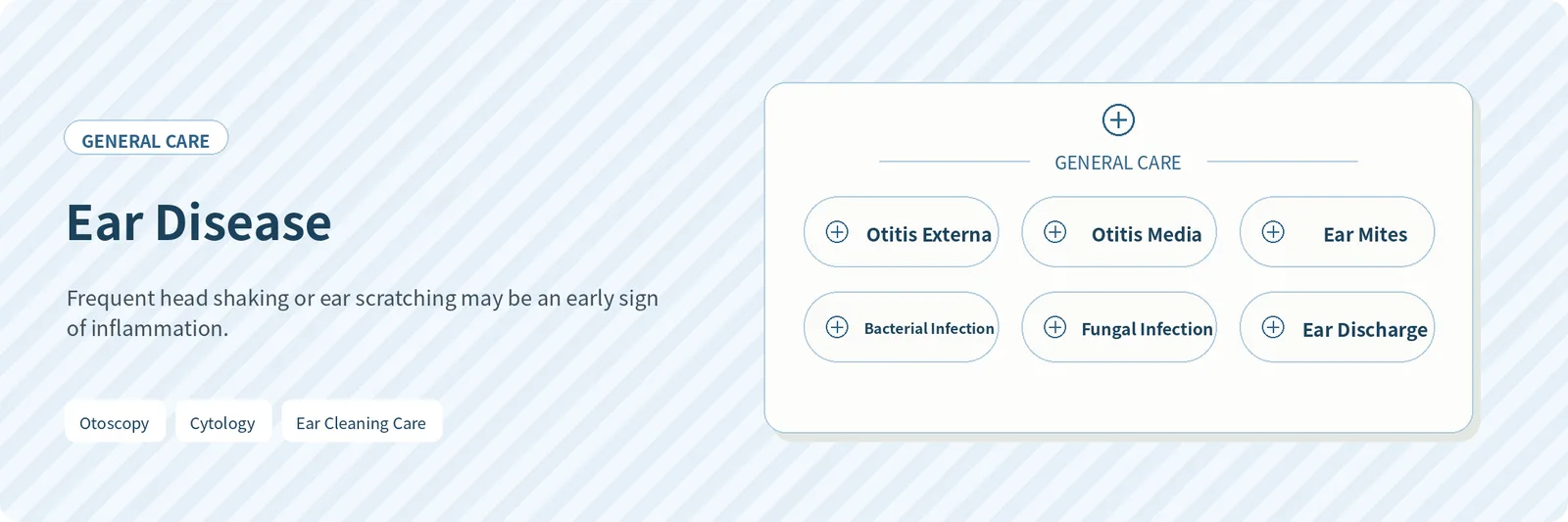
Head shaking and ear scratching may mean inflammation has already begun inside.
Signs to watch for
- Odor from the ears with more discharge
- Frequent head shaking or a head tilt
- Scratching around the ears causing wounds
- Red, swollen ear flaps
- Slower response when called
What causes it?
Otitis externa
The ear canal is a warm, humid tunnel where bacteria and yeast grow easily. Floppy ears and frequent swimming or baths raise the humidity and invite inflammation.
Ear mites
The telltale sign is dark, coffee-ground-like debris — most often seen in kittens. Housemate animals must be treated together to prevent reinfection.
Allergy showing in the ears
Recurrent ear infections are often a sign of underlying skin allergy. Treating only the ears invites relapse, so we look at the root cause together.
How we diagnose & treat
- 1
Step 1. Otoscopic exam
We examine the ear canal and eardrum and evaluate the discharge.
- 2
Step 2. Microscopy
Discharge is examined to distinguish bacteria, yeast, and mites so the right medication is chosen.
- 3
Step 3. Cleaning & treatment
Ear canal cleaning followed by targeted medication (drops and/or oral).
- 4
Step 4. Relapse management
We teach proper ear cleaning, and pursue allergy workup for repeat cases.
Key conditions
- Otitis externa
- Otitis media
- Ear mites
- Foreign body in ear canal
- Aural hematoma
- Chronic proliferative otitis
FAQ
We advise against it — swabs push debris deeper and can scratch the ear canal. We will show you how to care for the outer ear with a cleaning solution.
Many recurrent ear infections have an underlying allergy or ear-canal anatomy issue. Managing the underlying condition is what lengthens the time between relapses.
For healthy ears, once every 2–4 weeks is usually enough. During treatment, follow the prescribed schedule.
Contact Us
Ask us about these symptoms
10:00 AM – 9:00 PM · Closed Tuesdays (Open weekends)